
Living in Hyde Park, Cincinnati: Why Everyday Life Works So Well Here
Housing, retail, services, and gathering places accumulated over generations — not by design, but through time.
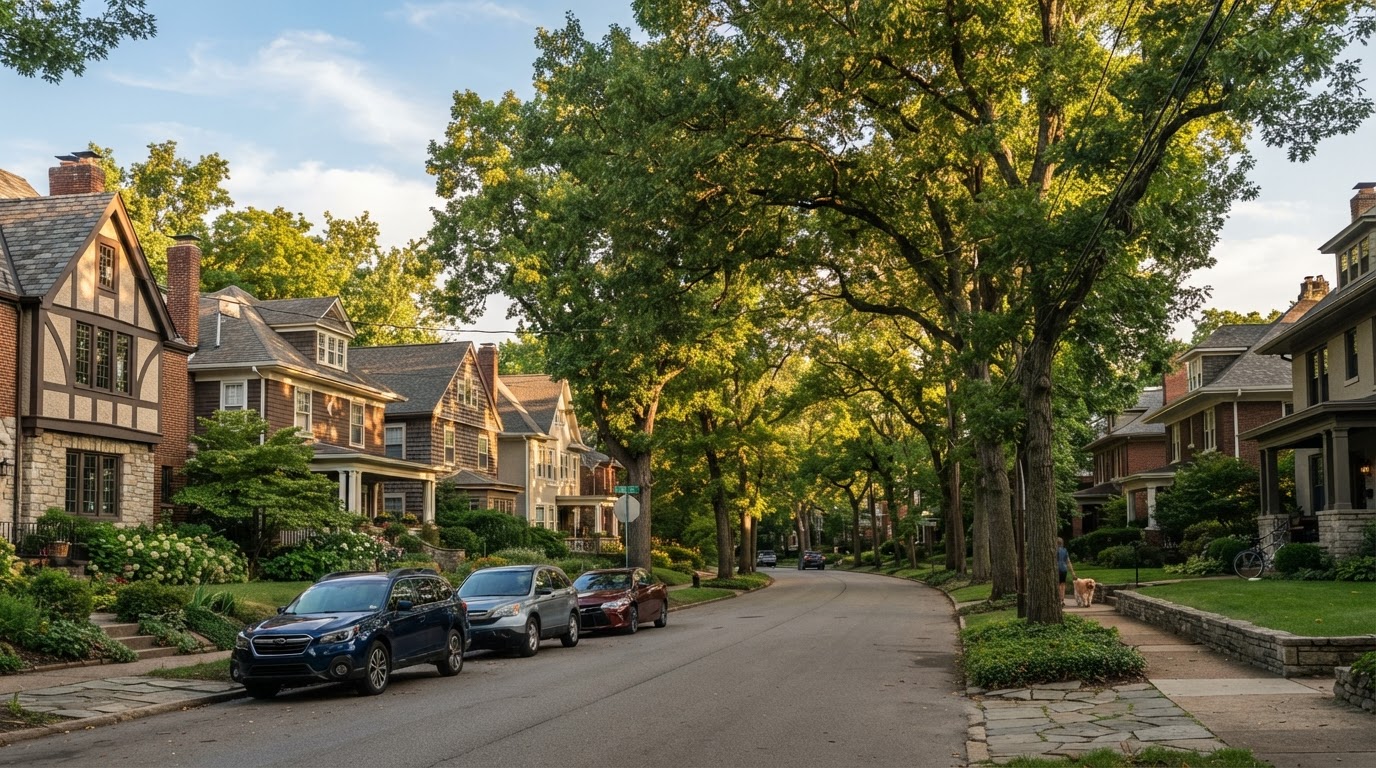
That observation is why I sometimes describe Hyde Park as an "unplanned planned community." Not because any single developer designed it that way, but because over generations the neighborhood has organically developed many of the qualities that planned communities deliberately set out to create — varied housing, walkable retail, everyday services, places to gather, and convenient connections to the rest of the city. The result is a neighborhood where much of everyday life can happen without leaving.
Housing Choices Instead of a Single Housing Type
One of the things that makes Hyde Park work is the diversity of its housing stock. The neighborhood does not consist of a single dominant housing product built during one period. Instead, it contains a broad mix accumulated over many decades — historic single-family homes with architectural styles ranging from Colonial Revival to Tudor, Italianate, and Queen Anne; smaller and larger houses on different scales; condominium options; apartments and multifamily housing; luxury properties on streets like Grandin Lane; and newer infill construction where it fits the existing fabric.
That variety matters because it means people at different housing stages can find options within the same general neighborhood rather than having to move to an entirely different part of Cincinnati when their needs change. The housing choices are not uniform — some streets are predominantly single-family, while others include multifamily or condominium development — but the overall picture is one of choice and variety rather than a single housing type.
Hyde Park Square Is More Than a Pretty Center
Hyde Park Square is often described as an attractive commercial district, and it is. But its real value is how it functions in everyday life. The Square includes independent boutiques, restaurants, coffee shops, and personal services — the kind of neighborhood-scale retail that many communities now try to engineer but that Hyde Park has maintained organically.
It also includes practical infrastructure. There is a U.S. Post Office located on Erie Avenue directly at the Square, which sounds mundane until you consider how many neighborhoods no longer have one. Banks, salons, and professional services sit alongside the restaurants and shops. The result is a commercial center that serves daily needs rather than functioning solely as a destination for evenings out.
If you want to explore the dining side of the Square in more depth, I've written a separate guide to Where to Eat in Hyde Park that covers the culinary landscape in detail. The point here is broader: the Square is part of what makes the neighborhood function, not simply a place to visit.
From Boutiques to Everyday Errands
The shopping ecosystem extends beyond the Square itself. Hyde Park Plaza, located on Paxton Avenue, includes a Kroger, Staples, Ace Hardware, and other everyday retail — the practical errands that fill the gaps between boutique shopping and dining. Farther along, the Rookwood retail area offers additional options, though it is worth noting that Rookwood sits in Norwood rather than within Hyde Park's own boundaries. The distinction matters geographically, even if residents commonly use both destinations as part of their daily routine.
Taken together, these destinations mean that much of what a household needs — groceries, hardware, pharmacy, clothing, gifts, professional services, and dining — is often within roughly a ten-minute drive, depending on traffic and where you begin. That is not a marketing claim about drive times; it is an observation about how the retail geography of this part of Cincinnati actually functions for the people who live here.
A Neighborhood People Move Through
One of the things I notice living in Hyde Park is how frequently runners are out on the neighborhood streets. It is a small observation, but it says something about how the streets are actually used. The grid of residential roads, the mature tree canopy, and the connections to nearby parks and recreational routes make the neighborhood a natural place for people to move through on foot.
On a typical morning or evening, runners are a familiar part of the street life. That visible activity contributes to the sense that Hyde Park is a neighborhood people actively use rather than simply a collection of houses.
Ault Park adds another dimension to how people use the neighborhood. Its paths and trails make it a natural destination for a run or leisurely walk, but it is also one of those places where the changing seasons become particularly visible. Flowering trees transform the landscape in spring, while fall brings an entirely different riot of color. Its gardens, pavilion, and scenic setting also help make the park a familiar backdrop for weddings and photography. It is both a recreational space and one of Hyde Park's most beautiful places simply to spend some time outdoors.
Self-Contained, But Not Isolated
There is not much reason to leave the neighborhood for everyday needs — but when you do, the connections are straightforward. Downtown Cincinnati and Over-the-Rhine are accessible to the west. Oakley and Mt. Lookout border Hyde Park to the east and north. The Rookwood area sits nearby. Destinations farther north, such as Montgomery, are readily accessible via major corridors.
The result is a neighborhood that can feel self-contained without feeling isolated. You can accomplish most daily tasks locally, but you are not cut off from the rest of the city when you want or need to go elsewhere. That balance is part of what makes Hyde Park function well for people whose lives extend beyond the neighborhood itself.
The "Unplanned Planned Community"
No single master plan produced the mix of housing types, the neighborhood-scale retail, the post office on the Square, the running routes, or the connections to surrounding communities. They developed over time and layered together. That organic evolution is part of Hyde Park's character — a neighborhood whose convenience was built through time rather than design.
To learn more, visit the Hyde Park community page or explore how the luxury market is performing in this part of Cincinnati.

About Chris
Chris Harris is an AI-Certified Agent™ with eXp Realty who has been helping buyers and sellers throughout Greater Cincinnati and Northern Kentucky for more than 25 years.
As publisher of Greater Cincy Homes and its editorial publication, Sweet Home Cincinnati, Chris shares local insights, neighborhood guides, market expertise, and practical advice designed to help people make confident real estate decisions—and love where they live!
Chris Harris | AI-Certified Agent™ | eXp Realty
📍 Serving Greater Cincinnati & Northern Kentucky
Helping you love where you live!