
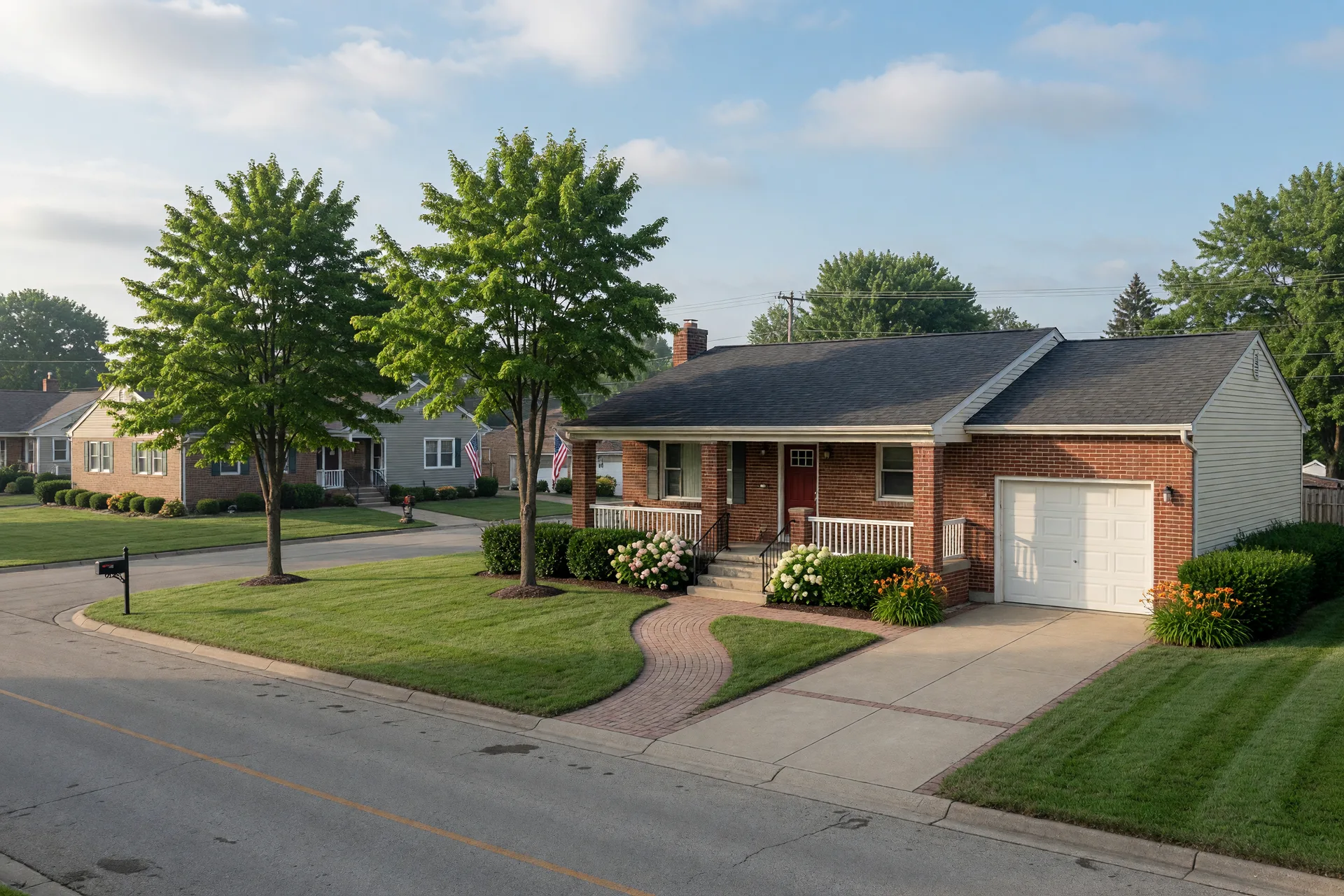
A well-maintained single-family ranch home with a welcoming entry and established landscaping, representative of Greater Cincinnati and Northern Kentucky

Understanding What Your Home Is Worth

Knowing what your home is worth helps you plan with confidence, whether you are thinking about selling, buying next, or simply wondering where you stand. The right picture comes from current market data, your home's details, and honest local perspective.

How value comes together

Understanding Your Home's Value

No single number tells the whole story of what a home is worth. Value is shaped by what similar homes in your area have recently sold for, what the local market is doing right now, the characteristics of your property, and the condition it is in. Together these signals point to the price range a buyer is likely to consider.

An automated estimate pulls from public records and recent sales to give you a fast, data-driven starting point. What it cannot do is see inside your home, weigh a recent renovation, or judge how your street compares to the one across town. That distinction matters: an estimate is a useful reference, not an appraisal and not a guarantee of what your home would sell for.

Value Comes Together from Three Signals

  • Comparable recent sales What similar homes nearby have actually sold for, not what asking prices suggest.
  • Current local market conditions How much inventory is available, how active buyers are, and how homes are selling right now.
  • The property itself Size, layout, age, features, lot, and the condition those details are in.

An automated estimate is a starting point. It is not an appraisal, and it does not guarantee any future sale price.

Two ways to look at value

Instant Estimate vs. Personalized Analysis

Both have a place. An instant estimate gives you a quick read; a personalized analysis gives you something to make a decision on.

The Instant Estimate

A fast, data-driven starting point built from public records and recent sales. Useful for an early sense of where your home sits in the market.

Where it has limits

  • Works from available data, not your home itself
  • Can't always capture your home's true condition
  • Misses unique features and neighborhood nuances

A Personalized Analysis

A conversation, and when appropriate a closer look, that brings together recent comparable sales, your home's condition and updates, and the way your specific community is behaving.

A useful two-step idea

Many homeowners like to start with an instant estimate for a quick, no-commitment read, then talk through a deeper personalized look when a real decision approaches. The first step is instant; the second step is a conversation, not a promise about the outcome.

What goes into the assessment

How Chris Evaluates Market Value

With more than 25 years helping buyers and sellers on both sides of the Ohio River, Chris treats technology and professional judgment as partners, not rivals. Tools organize the data; experience interprets it in the context of your home, your community, and your goals.

Comparable Properties

Recent sales of homes like yours in your area, adjusted for size, age, updates, and condition. They form the foundation of any realistic value discussion.

Current Inventory & Buyer Competition

How many homes are for sale and how many buyers are actively looking show whether conditions favor a faster sale or a more patient approach.

Neighborhood-Level Market Dynamics

School districts, commute patterns, local demand, and recent activity in your specific community can move value in ways citywide numbers miss.

Condition, Improvements & Unique Features

Maintenance, updates, layout, lot, and the details that make your home different from the house down the street all matter to a real buyer's offer.

The result is a value range you can understand and act on: grounded in current data, adjusted for your property, and interpreted with local experience in Ohio and Kentucky.

What carries the most weight

Factors That Influence Your Home's Value

Beyond the basics, a few factors carry particular weight when buyers decide what to offer. Seeing where your home stands on each helps you understand what is working and what, if anything, may be worth addressing.

Location

Your street, your community, your school district, and your commute all shape demand. Even a few blocks can matter to buyers comparing similar homes.

Property Features & Condition

Size, layout, bedrooms and baths, age, and overall upkeep set expectations for buyers before any improvements are even considered.

Improvements

Updated kitchens and baths, newer mechanicals, and well-maintained systems tend to carry real weight, while over-improvements may not return their full cost.

Market Timing & Current Demand

Inventory levels, interest rates, and seasonal patterns influence how many buyers are competing and how quickly homes move in your price range.

When a closer look helps

When a More Personalized Valuation Matters

An instant estimate is a fine place to start. When a decision is on the horizon, a deeper look gives you more to work with.

01

Preparing to Sell

A clearer picture of value helps you weigh pricing strategy, timing, and what to address before you list.

02

Exploring Downsizing or Relocation

A personalized look helps you compare what your current home may be worth against the options ahead of you.

03

Evaluating Selling Options

Different selling paths produce different outcomes. Understanding value helps you see which approach could make sense for your situation.

04

Planning Ahead, Without a Decision Yet

Many homeowners want a realistic sense of their position long before they move. That information is useful just to plan.

These conversations are informational and always no-pressure. They are not formal appraisals, and they are not legal, tax, or financial advice.

Let's Talk About Your Home's Value

Whether you are considering a sale, planning a move, or simply want a clearer sense of where you stand, a no-pressure conversation is a good place to start. No obligation, just a clear look at your options.