
Mariemont's Unmistakable Sense of Place: How a Planned Village Still Works Today
From historic architecture and human scale to neighborhood schools and civic traditions, discover why Mariemont feels and functions differently from any other Cincinnati community.
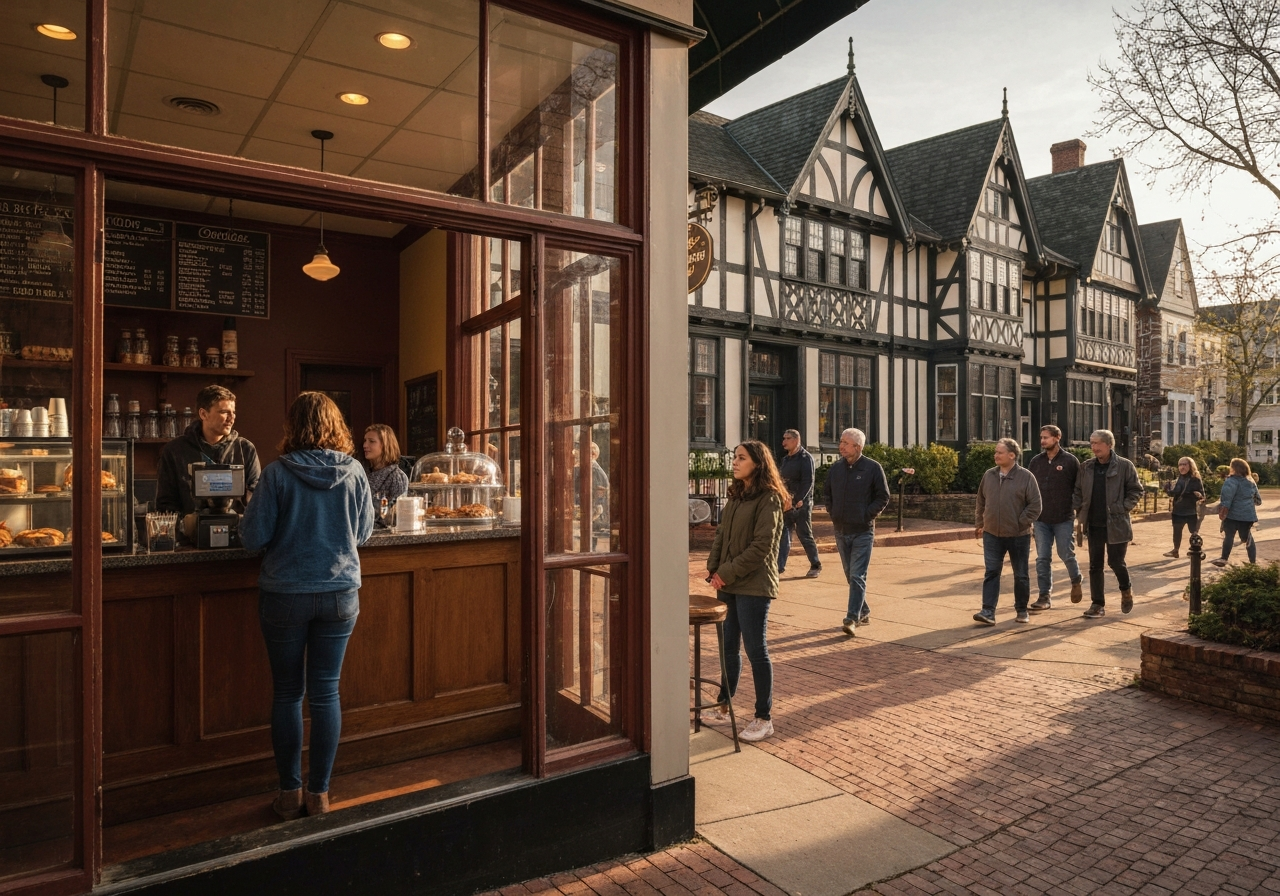
The first thing I notice about Mariemont is its unmistakable sense of place. The canopy of mature trees framing brick walkways, the Tudor Revival rooflines, and the octagonal Village Square create an immediate impression that you have crossed a boundary into a community designed with intentionality.
The original plan established a framework, the architecture created visual continuity, the compact scale connects the pieces, and the residents and civic institutions make it a living, breathing village nearly a century later.
The Original Vision: A Living Plan
When philanthropist Mary Emery broke ground on April 23, 1923, she envisioned a "National Exemplar" in town planning—a community that would demonstrate how architectural beauty, green space, and practical civic design could raise the standard of daily living. She selected renowned landscape architect and town planner John Nolen to bring that vision to life across roughly 420 acres overlooking the Little Miami River valley.
Nolen did not design Mariemont as a bedroom suburb or a grid of identical house lots. He designed a self-contained village with seven roads radiating from an octagonal Town Center, incorporating parks, concourses, schools, shops, and varied housing options into a single unified plan. In 2007, the National Park Service recognized the significance of this achievement by designating the Village of Mariemont a National Historic Landmark. What makes Mariemont extraordinary today, however, is not merely its historic status—it is that Nolen's plan still functions for modern daily life.
An Unmistakable Visual Identity
Mariemont's visual identity is grounded in human scale and architectural harmony. Multiple architects contributed to Mariemont's early buildings, creating architectural variety within a shared English Garden City aesthetic. Steeply pitched roofs, decorative half-timbering, prominent chimney stacks, stone masonry, and patterned brickwork create a streetscape that feels layered and permanent.
This architectural vocabulary extends beyond single-family residences to encompass civic buildings, commercial storefronts on Wooster Pike, the historic Mariemont Inn, and the Mary M. Emery Memorial Carillon in Dogwood Park. Because public spaces and private buildings share this common language, walking down Miami Road or Chestnut Place feels like traversing a single, carefully composed neighborhood landscape.
Old and New in the Same Visual Language
A living village cannot remain frozen in time, yet Mariemont has managed to evolve without losing its visual character. One of the most interesting aspects of the village's built environment is how newer developments—including luxury condominiums and residential infill—have been designed to blend with their surroundings.
Newer residential development and infill can be seen incorporating architectural cues from the historic village—including scale, massing, materials, roof forms, and street relationship—allowing new construction to feel connected to its surroundings rather than visually isolated from them. This continuity allows buyers seeking lower-maintenance living or newer construction to find options that still feel authentically part of Mariemont. (For a detailed look at how architectural review and lot configurations impact home purchases, see our companion guide on Buying a Home in Mariemont.)
Human Scale and Everyday Walkability
Beyond its architecture, Mariemont's sense of place is defined by how people move through it. The original plan places homes, public spaces, commercial areas, parks, schools, civic institutions, and walking routes within a relatively compact physical framework.
The compact layout places the Village Square, local parks, shops, restaurants, and civic institutions within a relatively concentrated area connected by tree-lined sidewalks and residential streets. Destinations such as independent boutiques, local dining at The National Exemplar, an afternoon movie at the historic Mariemont Theatre, or a walk through Dogwood Park are accessible on foot for many near the village center. Together, that compact layout and pedestrian scale make walking a visible part of everyday life in the village.
Schools Integrated Into the Village Fabric
School performance is an important consideration for many buyers evaluating Mariemont. In the Ohio Department of Education and Workforce's 2024–25 report card evaluations, Mariemont City Schools earned an Overall 5-Star Rating and ranked 8th statewide out of 607 public school districts on the state Performance Index.
What is equally striking from a community design perspective, however, is how the schools are physically integrated into the village. Mariemont Elementary School sits on Wooster Pike directly within the village boundaries, surrounded by residential streets and sidewalk connections. Its location makes the school an active, visible part of the village fabric.
Civic Life: Institutions Participating in the Community
A successful village requires more than coordinated architecture and smart planning—it requires active civic institutions that animate the physical space. The Village of Mariemont's municipal services provide a prime example of this community partnership.
The Mariemont Fire Department, operating out of the village center on Wooster Pike, serves the community with cross-trained firefighter-paramedics. Beyond responding to emergency calls, the department offers free smoke alarms, CPR classes, and home fire safety inspections, while hosting village disaster planning and community safety education. Each autumn during Fire Prevention Week, firefighters visit local schools to teach fire safety, culminating in an annual Fire Station Open House and Fire Expo. Younger residents are welcome to tour the equipment, giving families an opportunity to see demonstrations and build familiarity with local first responders.
A Sense of Place That Endures
Mariemont's sense of place comes from the interaction of its original plan, cohesive architecture, human scale, public spaces, integrated schools, civic institutions, and the way daily routines unfold within them. Whether you are spending a Saturday exploring the Village Square (as detailed in our A Perfect Saturday in Mariemont feature), walking to a neighborhood park, or attending a community event, the experience is shaped by a century of intentional stewardship.
Mary Emery and John Nolen set out to create a "National Exemplar" in town planning. Nearly one hundred years later, that original framework remains visible in Mariemont — not simply as a preserved piece of planning history, but in the architecture, public spaces, civic institutions, and everyday life of the village today.
The plan created the framework, the architecture created visual continuity, and the civic spirit makes Mariemont a living village.
Sources & Reference Materials:
- National Park Service, National Historic Landmark Registration: Village of Mariemont (2007)
- Ohio Department of Education and Workforce, Local Report Cards & Performance Index (2025)
- Village of Mariemont Official Website & Fire Department Directory
- Mariemont Preservation Foundation Historical Archives

About Chris
Chris Harris is an AI-Certified Agent™ with eXp Realty who has been helping buyers and sellers throughout Greater Cincinnati and Northern Kentucky for more than 25 years.
As publisher of Greater Cincy Homes and its editorial publication, Sweet Home Cincinnati, Chris shares local insights, neighborhood guides, market expertise, and practical advice designed to help people make confident real estate decisions—and love where they live!
Chris Harris | AI-Certified Agent™ | eXp Realty
📍 Serving Greater Cincinnati & Northern Kentucky
Helping you love where you live!