
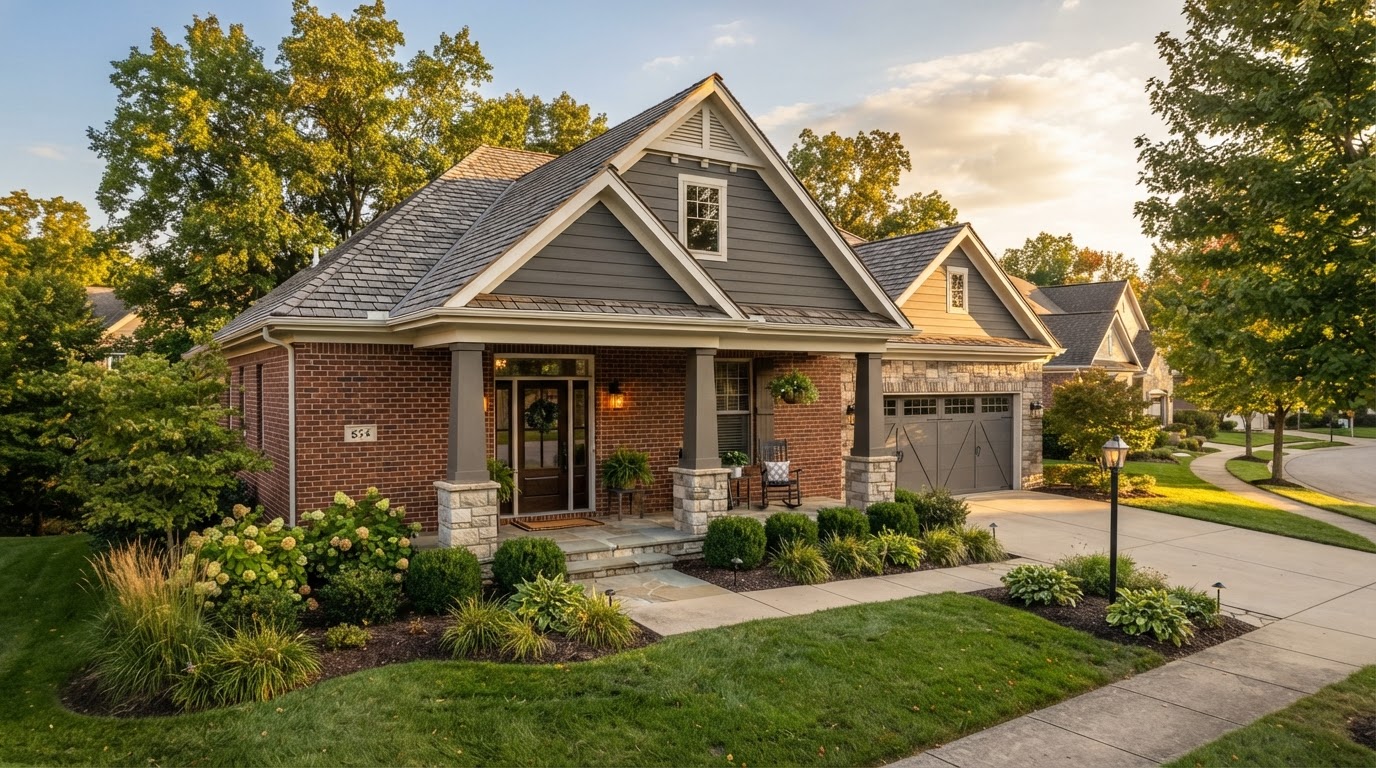
Many homeowners reach a point when they begin wondering whether their current home still fits the way they live. The question may be prompted by maintenance that feels increasingly demanding, rooms that sit unused, carrying costs that no longer make sense, a desire to travel more, or simply the feeling that a different kind of home would better match the next chapter of life.
But downsizing is not automatically the right answer. The objective is not to move for the sake of moving — it is to determine whether a different housing choice would genuinely improve the way you want to live. For some homeowners, the best decision is a thoughtful move. For others, the best decision is to stay and make targeted changes to the current home. Both are legitimate.
What Does "Downsizing" Actually Mean?
The word "downsizing" can be misleading. It implies that the goal is simply less space, but for most homeowners, the real objective is more nuanced. Downsizing might mean:
- less exterior maintenance and yard work
- fewer unused rooms to heat, cool, and furnish
- one-level living without stairs
- condominium ownership where someone else handles the building
- a patio home or townhome with shared maintenance
- a smaller detached home on a manageable lot
- newer construction with fewer immediate repairs
- a different location closer to the places you regularly go
- fewer household responsibilities overall
A homeowner may want less work without necessarily wanting dramatically less space. Understanding that distinction early in the process helps focus the search on properties that actually solve the right problem.
Start With What You Want Your Next Home to Solve
Before browsing listings, it helps to identify the problem before choosing the solution. What specifically about your current housing situation no longer works? Common considerations include:
- Exterior maintenance that takes more time or energy than you want to spend
- Yard work that has become a burden rather than a pleasure
- Stairs that are becoming a daily inconvenience
- Rooms that are rarely used but still cost money to maintain
- Carrying costs — utilities, taxes, insurance — that no longer fit your budget
- Distance from the places you regularly go — work, family, recreation, healthcare, dining
- A desire for travel flexibility without worrying about a large property
- Interest in newer systems, construction, or community amenities
- Proximity to specific priorities — family, recreation, services, walkability
Knowing what you want your next home to make easier helps you focus on the housing choices that actually fit the life you want to live.
Does Downsizing Actually Save Money?
This is one of the most important questions — and the answer is more complicated than it appears. Selling a larger home and purchasing a smaller one does not automatically mean lower overall housing costs.
The full financial picture depends on a range of factors:
- Your current mortgage balance and how much equity you have built
- Expected sale proceeds after closing costs, commissions, and any repairs
- The purchase price of the replacement property
- Mortgage rates and financing terms on the new home
- Property taxes, which may not be lower even if the home is smaller
- Condominium or HOA assessments, which add a monthly cost that may not exist in a detached home
- Insurance differences between property types
- Maintenance and utilities for the new property
- Transaction and moving costs — closing costs, moving services, potential storage
- Repairs or improvements needed either before selling or after buying
A smaller home with a monthly HOA fee may end up costing more each month than a larger home without one. A newer home may reduce immediate repair costs but carry a higher purchase price. A condo may eliminate exterior maintenance but introduce assessments and rules you did not have before.
This is not a reason to avoid downsizing — it is a reason to evaluate the entire financial picture rather than simply comparing square footage or sale prices. Where appropriate, consult a financial advisor, tax professional, or mortgage lender to understand how the numbers work for your specific situation.

What Kind of Home Comes Next?
Replacement-housing options throughout Greater Cincinnati and Northern Kentucky are broader than many homeowners initially assume. Depending on what you want your next home to solve, possibilities may include:
- Condominiums — exterior maintenance handled by the association, shared amenities, lock-and-leave convenience
- Patio homes — small-lot detached homes with reduced exterior responsibility
- Townhomes — attached homes that reduce exterior maintenance while retaining private entrances
- Ranch-style homes — single-story living without stairs
- Smaller single-family homes — less space on a more manageable lot
- Newer low-maintenance communities — modern construction with reduced immediate repair needs
- Urban or walkable housing — closer to dining, services, and amenities
Availability and price vary substantially by location across the region. A condo near downtown Cincinnati offers a very different lifestyle from a ranch home in a suburban Butler County community. Neither is universally better — the question is which one fits your priorities, budget, and daily geography.
Should You Buy First or Sell First?
This is one of the most common practical questions, and the answer depends on your financial situation.
Homeowners Who Need Proceeds From Their Current Home
If you need the equity from your current home to purchase the next one, the transactions need to be sequenced carefully. This typically involves preparing your current home for sale, listing it, accepting an offer, and then using the proceeds — or a bridge arrangement — to purchase the replacement property. Timing matters, and the process requires coordination between your sale, your purchase, and potentially temporary housing.
Homeowners Who Can Purchase Before Selling
Some homeowners have sufficient financial resources to purchase the next home before selling their current one. This can provide greater flexibility — you can take your time finding the right property, move at your own pace, and sell the previous home without the pressure of a pending purchase. However, this approach is not available to everyone and involves carrying two properties for a period of time.
The key takeaway is that the order of the transactions should be planned before you begin making offers or preparing to sell. Talk with a mortgage lender early to understand your options. This is not a decision to improvise mid-process.
What About the House Full of Belongings?
For someone who has lived in the same home for many years, deciding what happens to furniture, collections, household items, family belongings, and accumulated possessions can be one of the most time-consuming parts of the transition. It is also often the most emotionally complicated — these belongings represent memories, family history, and different chapters of life, and separating from them can feel like letting go of more than just objects.
The most effective approach is usually to start early and work through the home systematically, separating belongings into categories:
- What will move with you
- What may go to family or friends
- What may be sold
- What may be donated
- What may need professional removal or disposal
You do not have to handle everything alone. Professional resources — estate sale services, organizers, donation coordinators, and moving companies — can help manage parts of the process. Starting early is the single most important step. Most homeowners underestimate how long this phase takes.
How Much Work Should You Do Before Selling?
A very common question is whether to renovate before selling. The answer depends on the property, its condition, the likely buyer, the local market, timing, budget, and the homeowner's priorities.
It helps to distinguish between:
- Necessary repairs — things that a buyer would likely expect to function or that could deter offers
- Strategic preparation — decluttering, deep cleaning, painting, and staging that help the home present well
- Cosmetic improvements — updates that may make the home more attractive but are not essential
- Major renovations — kitchen or bathroom remodels that may not produce a worthwhile return in every market or price range
There is no universal recommendation. A home that has been well maintained may need only strategic preparation. A home with deferred maintenance may benefit from targeted repairs. A major renovation undertaken without understanding the likely return can cost more than it adds in value. This is where experienced seller guidance — understanding what buyers in your price range and community actually expect — becomes genuinely useful.
The Emotional Side of Leaving a Longtime Home
A house is not just a financial asset. For someone who has lived in the same home for many years, it represents routines, celebrations, work, family history, neighborhood relationships, and memories. A technically sensible real estate decision can still be emotionally complicated.
There is no requirement that someone move simply because a house is larger than they currently need. If the home still works for you — if the maintenance is manageable, the costs are sustainable, and the location still fits — staying may be the right choice. The decision should be yours, made with clear information rather than pressure.
Questions Worth Asking Before You Decide
- What am I hoping will be easier or better after I move?
- Which parts of my current home no longer work for me?
- What would I miss if I left?
- What type of housing would actually solve the problem?
- What would my complete financial picture look like after selling and buying?
- Do I need to sell before I can buy?
- How much preparation would my current home need to sell well?
- What will I do with belongings that will not move with me?
- Where do I want my daily life to happen?
- Would moving now improve my situation enough to justify the disruption and expense?
Chris's Perspective
Thoughtful downsizing starts with understanding what you want the next chapter of your housing to accomplish. Once that is clear, the decisions about your current home, your next home, and the timing between the two become much easier to evaluate.
For some homeowners, selling first makes the most sense. Others have the flexibility to purchase their next home before selling. And sometimes, after considering the options, staying where you are turns out to be the better choice.
The goal is to determine whether a different home would genuinely make your life work better — and, if it would, create a plan that makes the transition as smooth as possible.
If you're beginning to think about downsizing, you can explore how I help homeowners plan the transition or reach out directly for a conversation about what might make sense for you.