
Walkable Cincinnati: Exploring Neighborhoods Where Everyday Life Is Just Steps Away
Explore walkable neighborhoods in Cincinnati and Northern Kentucky, from historic business districts to riverfront living, and learn what to look for when buying.
By Chris Harris • November 27, 2026 • 7 min read

Explore walkable neighborhoods in Cincinnati and Northern Kentucky, from historic business districts to riverfront living, and learn what to look for when buying.
What Does Walkable Living Mean to You?
There is a simple pleasure in stepping out the front door and walking to the places that anchor everyday life: the coffee shop, the bakery, the park, the library, the corner store, the transit stop. Walkable neighborhoods make those destinations feel close, and for many buyers that sense of connection is a deciding factor in choosing a home. But walkability is not uniform, even within Greater Cincinnati. It can differ from one neighborhood to the next and sometimes from one block to the next. The same street pattern that makes one address wonderfully convenient may leave another, just around the corner, more dependent on the car. It helps to understand what walkable living really means and to separate the kinds of walking that matter to you. There is a difference between walking for recreation and exercise; walking to restaurants, entertainment, and social destinations; walking to accomplish everyday errands; and walking to transit connections. Most neighborhoods offer some of these. Few offer all of them equally, and the mix you need is personal.
Understanding Cincinnati's Geography
Cincinnati's character has always been shaped by its terrain. The city sits in a basin ringed by hills, carved by the Ohio River and its tributaries, and tied together by bridges. That geography is part of the region's charm, but it also shapes how easy walking truly is. Historic street patterns were laid out for people and streetcars long before cars dominated, which is why many older neighborhoods have tighter blocks, corner businesses, and destinations within a reasonable stroll. At the same time, a short distance on a map does not always translate into an easy walk. Steep grades, long staircases, busy crossings, sidewalk gaps, and winding streets can change the experience dramatically. When you evaluate walkability, look beyond the map: consider sidewalks and their condition, hills and elevation changes, crosswalk placement and signal timing, traffic volume and speed, and, most importantly, where the actual destinations sit in relation to the front door.
The region's pedestrian character also crosses the Ohio River. Buyers comparing Ohio and Kentucky will find the two states differ in taxes, disclosure, and closing practice worth understanding before deciding where to focus their search.
Exploring Walkable Communities on the Ohio Side
Several Cincinnati neighborhoods were built around walkable commercial streets that still shape everyday life. Over-the-Rhine, just north of downtown, is one of the region's densest and most walkable districts, with a compact historic street grid, Findlay Market, and restaurant, retail, and entertainment uses along its Vine and Main street corridors. Downtown Cincinnati pairs residences with restaurants, theaters, businesses, and the riverfront, all within a walkable core served by the streetcar. Hyde Park's traditional center, Hyde Park Square, gathers shops, restaurants, and services around a compact square of older buildings. Oakley's business district along Madison Road and around Oakley Square offers a walkable commercial core surrounded by residential streets. Clifton's Gaslight District, centered on Ludlow Avenue, is an established neighborhood shopping street in a historic residential setting. Northside, along Hamilton Avenue, is known for independent businesses, cafes, and a community-oriented commercial street. Pleasant Ridge's business district along Montgomery Road provides a walkable cluster of shops and restaurants within a residential neighborhood.
Mariemont, an independent village, was planned around a town center in which shops and services sit close to its square and surrounding homes. Wyoming, also its own municipality, has a walkable village center with neighborhood businesses near its residential streets. Some of these are Cincinnati city neighborhoods, while others, such as Mariemont and Wyoming, are independent municipalities, and both approaches can produce walkable places that feel quite different.
Exploring Walkable Communities in Northern Kentucky
Northern Kentucky's river cities offer walkable settings of their own. Covington, whose MainStrasse Village pairs restored historic buildings, shops, and restaurants along brick streets, has a walkable downtown and historic residential streets in areas such as Licking Riverside and Wallace Woods. Newport places its historic East Row residential neighborhood close to the Monmouth Street corridor and the riverfront. Bellevue's Fairfield Avenue business district anchors a compact, traditional community. Dayton, just upriver, has invested in riverfront pedestrian connections that link the community into the growing regional trail network. Fort Thomas, whose neighborhood business districts and hilly, tree-lined streets create walkable pockets within a residential community, is a Campbell County city just south of Newport.
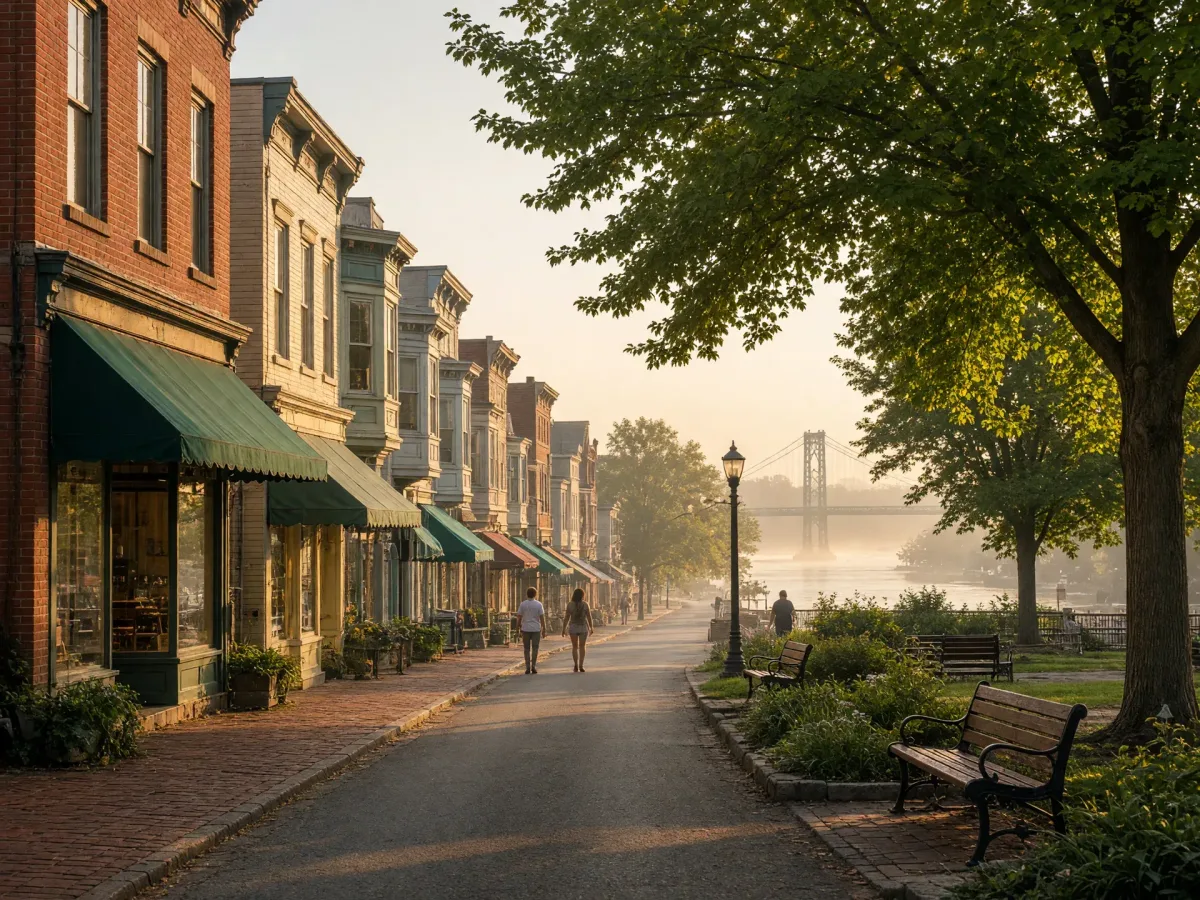
As on the Ohio side, pedestrian accessibility varies with the specific address; a home a few blocks uphill from a business district can feel quite different from one directly across the street. Relocating buyers can start with the moving to Northern Kentucky guide and browse the Northern Kentucky communities hub for a fuller look at the region.
Different Ways to Experience Walkable Living
Downtown and urban condominium living puts residences alongside restaurants, theaters, businesses, and the riverfront, with the streetcar connecting the core. Historic residential neighborhoods near commercial districts offer older single-family homes and some townhomes on walkable streets a short stroll from the shops and services they sit beside. Traditional neighborhood squares and village centers pair single-family homes and condominiums with a compact commercial heart, and buyers seeking one-floor living options can explore what the nearby housing stock offers. Riverfront living, where it exists, adds recreational pedestrian connections along the water to everyday destinations. Not every housing type exists in every community, so part of the search is matching the housing that sits within walking distance of the places you use most.
How to Evaluate Walkability Before Buying a Home
Because walkability changes from one address to the next, the meaningful evaluation belongs to the specific property. Spend time on the ground with your own routine in mind before relying on a general impression.
Trace the actual walking routes from a candidate property to the places you visit most, not a straight line on a map.
Measure time and comfort, not just miles a pleasant ten-minute stroll and ten stressful minutes alongside heavy traffic feel very different.
Check sidewalk continuity and condition including gaps, shared driveways, and stretches where a sidewalk simply ends.
Walk the hills and stairs yourself elevation changes that look minor on a map can be significant on a daily walk.
Study street crossings and traffic note crosswalk placement, signal timing, traffic speed, and how the crossing feels when you would use it.
Confirm everyday services grocery stores, pharmacies, and other routine destinations matter more than coffee shops for daily life.
Check public transportation access see which stops and routes serve the property and connect to the places you go.
Consider parking and vehicle needs a walkable home may still depend on a car for work or errands, so garage access and on-street parking belong in the equation.
Separate walkability from accessibility nearby destinations do not make a neighborhood accessible to every individual; curb ramps, surfaces, grades, and stairs must be weighed against your needs.
Visit at different times of day lighting, traffic, and a street's character change between morning and evening.
Walk Score and similar tools are useful starting points but do not replace property-specific evaluation. Walk candidate routes yourself, at the times you would use them, and judge them against your own routine.
Frequently Asked Questions
How can I evaluate a home's walkability before buying?
Walk the routes you would actually use from the front door, and judge sidewalks, crossings, hills, stairs, and traffic against your needs. Online tools are starting points, not substitutes for property-specific evaluation.
READ THE FULL ANSWERCan I live in Greater Cincinnati without owning a car?
Feasibility depends on home location, work location, daily destinations, and transit access. Metro (SORTA), TANK, the Connector streetcar, and the Southbank Shuttle serve parts of the region, but no community guarantees a car-free lifestyle.
READ THE FULL ANSWERWhat is the difference between walkability and accessibility?
Walkability describes how close everyday destinations are; accessibility describes whether routes work for a specific individual. Nearby shops do not make a neighborhood accessible to everyone, so sidewalks, curb ramps, grades, and stairs must be evaluated individually.
READ THE FULL ANSWERIs Fort Thomas walkable?
Fort Thomas has neighborhood business districts and hilly, tree-lined streets that create walkable pockets within a residential community. Terrain varies, so walkability depends on the specific address and your actual routes.
READ THE FULL ANSWERDoes living in a walkable neighborhood affect home values?
Proximity to amenities may influence buyer preferences, and many buyers weigh walkability in their search. Property values depend on many factors, including the home, its condition, and the broader market, so no premium or appreciation outcome should be assumed.
Are there walkable communities in Northern Kentucky?
Yes. Covington, Newport, Bellevue, Dayton, and Fort Thomas each have business districts with pedestrian-friendly character, though accessibility varies by address. The walk from a particular home is what matters.
Finding a Home That Fits Your Daily Routine
Walkability is one dimension of the home search, weighed alongside housing needs, location, transportation, and budget. A home that fits your daily routine begins with clarity about how you actually live, then matches communities and properties to that reality.
Chris Harris has spent more than 25 years helping buyers and sellers throughout Greater Cincinnati and Northern Kentucky and is licensed in both states. She can compare walkable settings on either side of the river, explain how the two states differ, and help you weigh a specific home against the way you live, whether you are buying your first home, relocating, or planning the next chapter.
Talk through what walkable living could mean for you
Bring your daily routine, wish list, and questions to a conversation, and find a home that fits the life you actually lead.
Sources & Reference Materials
Sources: Metro (SORTA); TANK; the Cincinnati Bell Connector streetcar; the Southbank Shuttle; Southbank Partners for Riverfront Commons; and municipal and neighborhood sources for Covington, Newport, Bellevue, Dayton, Fort Thomas, Hyde Park Square, Oakley, Clifton's Gaslight District, Northside, Pleasant Ridge, Mariemont, and Wyoming, as appropriate to the claims made.
About Chris

Chris Harris is an AI-Certified Agent™ with eXp Realty who has been helping buyers and sellers throughout Greater Cincinnati and Northern Kentucky for more than 25 years.
As publisher of Greater Cincy Homes and its editorial publication, Sweet Home Cincinnati, Chris shares local insights, neighborhood guides, market expertise, and practical advice designed to help people make confident real estate decisions—and love where they live!
Chris Harris | AI-Certified Agent™ | eXp Realty
- 📍 Serving Greater Cincinnati & Northern Kentucky
- 🌐 GreaterCincyHomes.com
- ✉️ chris@greatercincyhomes.com
- 📞 (513) 325-9667
Helping you love where you live!
Last updated November 27, 2026
Keep Reading

Before You Buy a Condo: How to Evaluate the Financial Health of a Condominium Association
Learn how to evaluate a condominium association's financial health in Greater Cincinnati and Northern Kentucky, from budgets and reserves to special assessments and financing.
By Chris HarrisNovember 27, 2026

Buying a Home in Ohio vs. Kentucky: What Greater Cincinnati Buyers Should Know
Compare buying a home in Ohio and Kentucky side by side: licensed representation, state and local taxes, property assessment, the buying process, and everyday life across the river.
By Chris HarrisNovember 25, 2026

This Weekend in Cincinnati: Thanksgiving Edition November 26–29, 2026
Thanksgiving weekend in Greater Cincinnati and Northern Kentucky: the 117th Western & Southern Thanksgiving Day Race, Light Up the Square, Holiday Junction's 80th season, WinterFest opening weekend, and more.
By Chris HarrisNovember 25, 2026